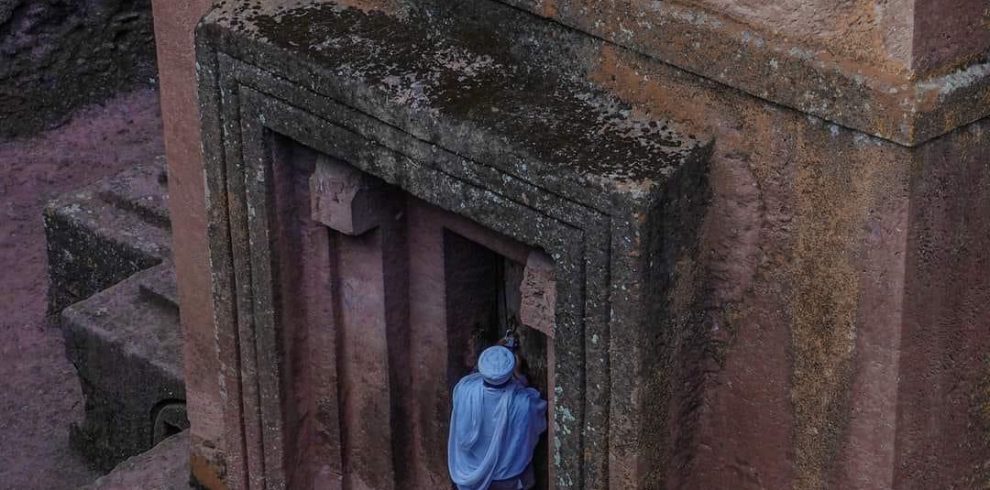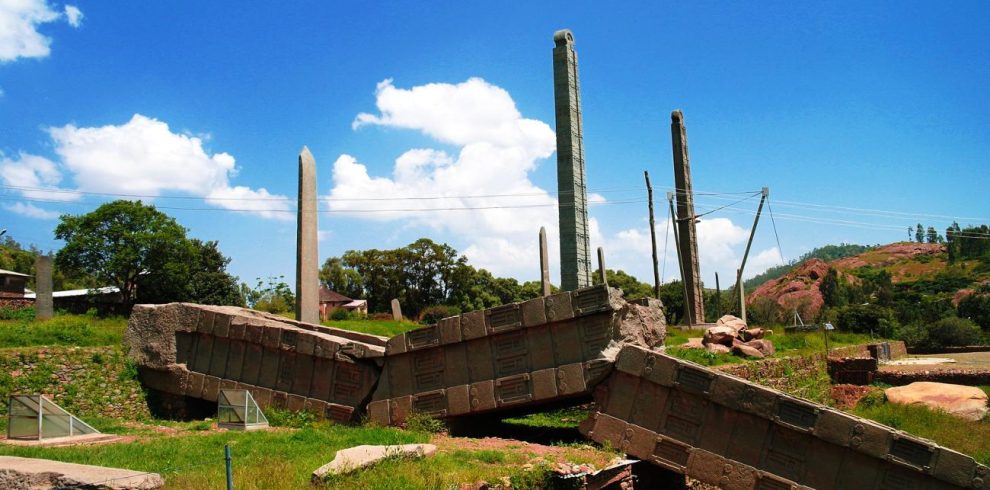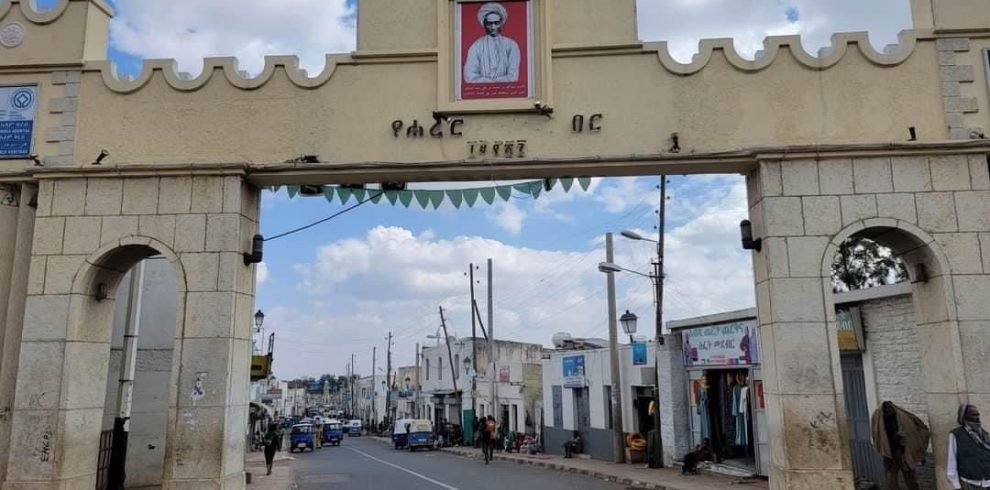
Overview
Itinerary
Your Ethiopian birding odyssey commences with your arrival at Bole International Airport, where your expert ornithological guide and driver will be waiting to transfer you to the hotel. After check-in, we maximize our daylight hours with an afternoon excursion that combines cultural context with valuable introductory birding.
Our first stop is Entoto Mountain Park, a critical high-altitude habitat on the northern edge of Addis. This forested area is a key site for several of Ethiopia's endemic and near-endemic highland species. We will actively search for the White-collared Pigeon, the endemic Abyssinian Catbird, the energetic Abyssinian Woodpecker, and the beautiful Wattled Ibis. Raptors are also a highlight here, with Augur Buzzards and Tawny Eagles frequently seen.
Before returning to the city center, we'll touch on Addis Ababa's cultural foundations with visits to the National Museum and the Ethnographic Museum, gaining appreciation for the human history that parallels the natural wonders we are here to explore. A short stop at Friendship Park allows for relaxed observation of urban bird species, including Bronze Mannikins, Rüppell's Weavers, and Hadada Ibis foraging on the lawns. Evening returns to the hotel, with dinner and overnight in Addis Ababa.
This morning, we transfer to Addis Ababa's Bole International Airport for a scenic domestic flight aboard Ethiopian Airlines to the lakeside city of Bahir Dar, the capital of the Amhara Region and the gateway to Lake Tana, Ethiopia's largest body of water.
Upon arrival, we will immerse ourselves in the vibrant local culture with a visit to Bahir Dar's bustling open-air marketplace. This lively hub offers a sensory feast—stalls overflowing with fresh produce, colorful textiles, handcrafted pottery, and aromatic spices. It provides a wonderful opportunity to observe everyday Ethiopian life and interact with friendly local vendors.
Following our market exploration, we make our way to the lake's shore to board a private motorized boat for an unforgettable afternoon on the waters of Lake Tana. This vast highland lake, situated at an elevation of approximately 1,800 meters, is the source of the legendary Blue Nile River and harbors remarkable ecological and historical treasures.
Our boat tour will take us to several of the lake's ancient island monasteries, some dating back to the 14th century. These secluded religious sanctuaries, accessible only by water, are adorned with vibrant frescoes and house priceless ecclesiastical artifacts. They offer a serene glimpse into Ethiopia's deep Orthodox Christian heritage.
Beyond their cultural significance, these islands and the lake's extensive papyrus-fringed shorelines are thriving wildlife havens. We will navigate slowly through the shallows, scanning the waters for the semi-aquatic Hippopotamuses that surface with characteristic grunts and splashes. In the shoreline woodlands and fig trees, troops of Black and White Colobus Monkeys leap gracefully between branches, their long white tails trailing behind them.
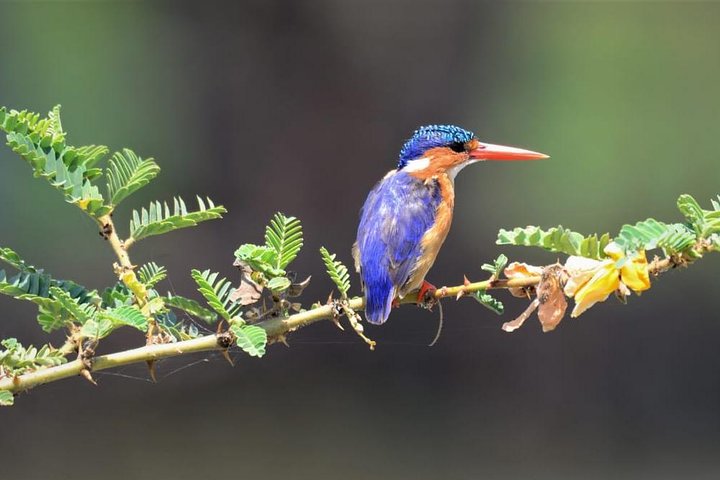
Birdlife here is exceptionally abundant. Large flocks of Eastern White Pelicans glide low over the water or gather in spectacular feeding formations. Elegant Black Crowned Cranes pick their way through the marshes, while the tiny, jewel-like Malachite Kingfisher flashes electric blue and orange as it darts from perches above the water. Among the lily pads and floating vegetation, the delicate Lesser Jacana walks with its distinctive long toes spread wide, appearing to dance on the water's surface. We will also be on the lookout for Pied Kingfishers, African Darters, Great Egrets, and a variety of herons and ibises that are abundant throughout the lake system.
After a full and rewarding day on the water, we will return to Bahir Dar, where we check into our hotel for dinner and an overnight stay, surrounded by the tranquility of this lakeside city.
Option 2: Concise & Action-Focused (Best for Shorter Summaries)
Day 2: Bahir Dar – Lake Tana and Blue Nile Source
We begin with a morning flight from Addis Ababa to Bahir Dar, the picturesque city on the shores of Lake Tana. After landing, we'll explore the colorful local market, experiencing the rhythm of daily life in this regional capital. Our main highlight follows: a boat excursion onto the vast expanse of Lake Tana, the source of the Blue Nile. We'll visit ancient island monasteries, where centuries-old religious art and architecture await. The journey across the lake is equally rewarding—the waters and surrounding wetlands teem with wildlife. Expect to see hippos wallowing in the shallows, troops of striking black and white colobus monkeys in the riparian trees, and a spectacular array of birds, including black crowned cranes, eastern white pelicans, the dazzling malachite kingfisher, and the distinctive lesser jacana. This is one of Ethiopia's most remarkable birding and wildlife experiences. We retire to our Bahir Dar hotel for the night.
We rise early this morning, departing Bahir Dar as the sun begins to paint the sky in shades of amber and gold. Our road journey heads northeast toward Debark, the primary gateway to the majestic Semien Mountains National Park. This overland route traverses a landscape of dramatic transformation, carrying us from the lush lowlands toward the rugged highlands that define Ethiopia's northern wilderness.
Our first major stop is one of Ethiopia's most spectacular natural wonders: the Blue Nile Falls, known locally as Tis Abay, meaning "Smoking Water." Here, the mighty Blue Nile plunges over a 45-meter-high cliff, sending up a perpetual mist that nourishes a lush microclimate along the riverbanks. The spray creates shimmering rainbows in the morning light and sustains a verdant corridor of vegetation that attracts an extraordinary concentration of birdlife. As we walk the trails approaching the falls, we will keep our binoculars ready for species such as the Hamerkop, Giant Kingfisher, Black-headed Heron, and the colorful Northern Carmine Bee-eater. The cliffs and rocky outcrops around the cascade often host Rock Martins, White-throated Swifts, and the striking Red-billed Pigeon. The falls' surroundings also attract a variety of weavers, sunbirds, and raptors, making this a rewarding birding stop before we continue our journey.
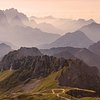
After fully absorbing the power and beauty of the falls, we resume our drive toward Debark. The road winds steadily upward, ascending through increasingly dramatic terrain. We will pause at several carefully chosen viewpoints to take in the breathtaking panoramas of the Semien Gorge, a vast chasm carved over millennia by the region's rivers. The scale is humbling—layers of volcanic rock reveal the geological story of this ancient landscape, with sheer escarpments plunging into verdant valleys below.
These stops are not merely for photography; they also provide our first opportunity to encounter one of Ethiopia's most extraordinary mammals: the Chilada Baboon, also known as the Gelada. These unique primates are endemic to the Ethiopian highlands and are often seen grazing on grasses along the gorge edges, their distinctive red chest patches and long, flowing manes making them unmistakable. Watching a troop of geladas socialize, forage, and interact against the backdrop of the Semien escarpment is an experience that lingers long in the memory. Other wildlife we may spot en route includes the elusive Klipspringer antelope, nimble on the steep rocky slopes, and various raptors soaring on the updrafts.
We continue our ascent, finally arriving in the town of Debark in the late afternoon. This small highland settlement serves as the administrative and logistical hub for the Semien Mountains National Park. Here, we will check into our accommodation, finalize park formalities, and prepare for the days of trekking and exploration that await us. Dinner and overnight in Debark, at the threshold of Africa's premier mountain wilderness.
The day commences with an early morning walk to a viewpoint overlooking the Semien Mountains massif, where the rising sun illuminates the vast volcanic ridges and plunging gorges. This not only provides a spectacular photographic opportunity but also offers a chance to observe early morning raptor activity as they take to the thermals.
Following breakfast, we drive to Chenek, a high-altitude camp situated at approximately 3,600 meters, which serves as an ideal base for birding and wildlife observation. The vegetation here is a mix of Afro-alpine moorland and rocky outcrops, providing habitat for several of Ethiopia's most sought-after bird species.
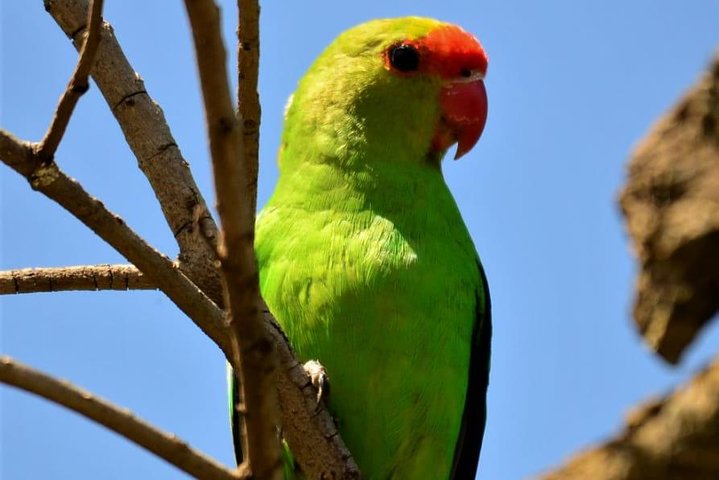
Our walk around the camp area is specifically targeted at the region's avian endemics. We will systematically scan the grasslands for the Spot-breasted Plover, a cryptically colored endemic that relies on the high-altitude meadows. The Abyssinian Longclaw is another grassland species we will search for, often seen perching on low rocks or tussocks, its distinctive call alerting us to its presence. The cliff faces and rocky escarpments are home to the enigmatic Ankober Serin, which we will observe with patience as it forages on the rock faces. The imposing Thick-billed Raven patrols the ridges, and flocks of the colourful Black-winged Lovebird may be encountered in the scrubby vegetation. We will also look for the Red-billed Chough, which often associates with the lovebird flocks.
Mammal observation is equally productive. The elusive Walia Ibex is our primary target, and Chenek offers some of the best viewing opportunities for this iconic endemic. We will also be alert for Gelada Baboons, which are often present in large numbers, as well as Klipspringer and possibly the rare Ethiopian Wolf if luck is on our side.
After a full morning of exploration, we pack up and begin the drive to one of the best lodge in Africa for an Overnight.
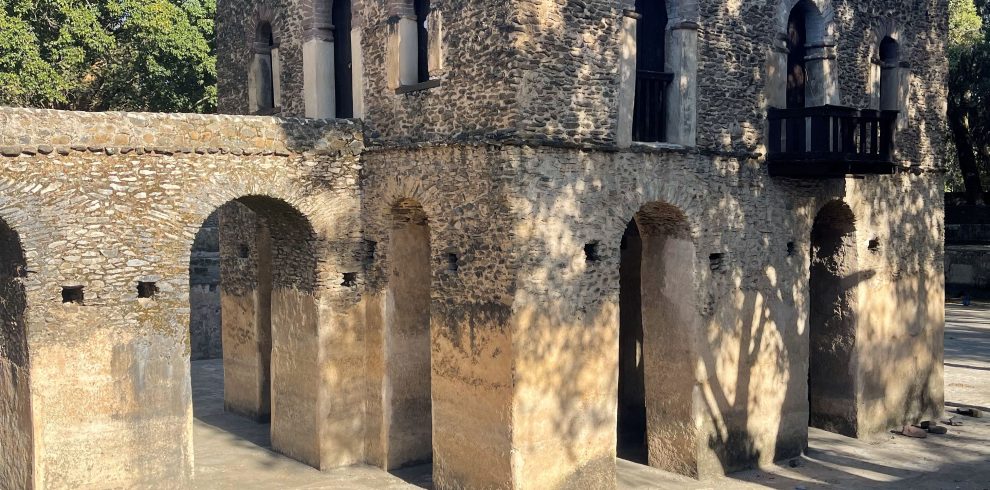
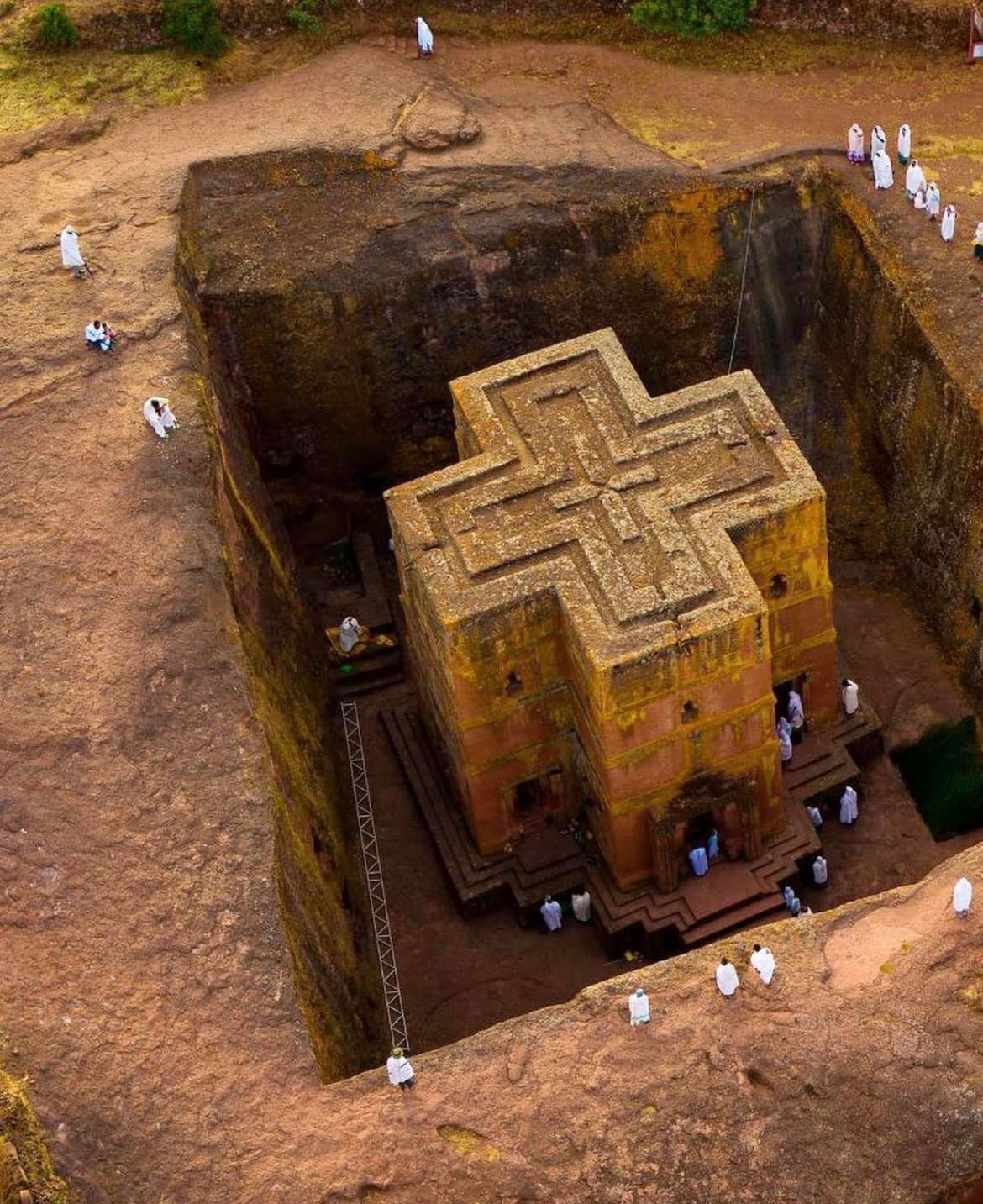
Our day is dedicated to uncovering the historical treasures of Gondar, the former imperial capital of Ethiopia. We begin at the Royal Enclosure, a UNESCO World Heritage site that houses the castles of the Solomonic emperors who ruled from the 17th to the 19th centuries. The fortress-like complex is a unique testament to the cultural synthesis that defined the Gondarine period—European, Indian, and local architectural influences merge in the imposing stone structures. We explore the atmospheric halls and towers of Fasilidas's Castle, Iyasu's Palace, and the intricate bathhouse, gaining insight into the dynasty that shaped modern Ethiopian identity.
Our cultural immersion continues at the Debre Birhan Selassie Church, a sacred sanctuary tucked away in the suburbs of Gondar. Here, the simplicity of the exterior belies the extraordinary artistry within. The wooden ceiling is adorned with seraphim—rows upon rows of angels with exquisitely painted faces—creating an unforgettable celestial canopy. The murals on the walls narrate scenes from the Old and New Testaments, offering a vivid portrayal of Orthodox Christian theology and Ethiopian iconographic traditions. A visit here is both a spiritual pilgrimage and an encounter with Ethiopia's artistic genius.
Following lunch, we proceed to Gondar's airport for our evening flight to Addis Ababa. The flight delivers us to the capital by nightfall, where our transfer awaits. We check into our hotel for a final overnight in Ethiopia, reflecting on the rich blend of nature, wildlife, and heritage that has defined this exceptional journey.
Today's drive southward marks our transition from the highlands to the Rift Valley, a region renowned for its exceptional avian diversity. Our primary destination is Lake Ziway, a shallow freshwater lake that is part of the Rift Valley's chain of lakes and a key site for waterbird observation.
Upon arrival at Lake Ziway, we board a boat for the short journey to Bird Island, an uninhabited islet that functions as a major breeding and roosting site for a remarkable variety of species. The island's vegetation, predominantly comprised of acacia trees and dense shrubs, provides nesting habitat for thousands of birds. Our approach will be slow and careful, allowing us to observe the spectacle without disturbing the colony.
The bird list here is extensive. We will focus on the large colony of Great White Pelicans, whose numbers can reach into the thousands. We will also document the many Hamerkop nests, the large stick structures that give away their presence. Yellow-billed Storks and African Spoonbills feed in the shallows around the island, while Cattle Egrets, Little Egrets, and Great Egrets are present in large numbers. We will also search for the Saddle-billed Stork, a striking species with its black and white plumage and red-banded beak. Herons are well-represented, with Goliath Heron, Grey Heron, Black-headed Heron, and Purple Heron all likely sightings.
Kingfishers add a splash of brilliant color—we will look for Malachite Kingfisher, Pied Kingfisher, and the Giant Kingfisher. The island also attracts Cormorants, African Darters, and the distinctive Hamerkop. This location is arguably the Rift Valley's most concentrated birding site, and we will allocate sufficient time to fully appreciate its abundance.
After our island exploration, we continue along the lakeshore, possibly pausing at additional stops to scan for raptors and other species before arriving at Sabana Lodge. The lodge itself is a birding destination in its own right, with lush gardens that attract a wide range of species. We will spend the late afternoon and evening birding the lodge grounds, targeting the Go-away-bird, Hamerkop, Speckled Mousebird, Northern Fiscal, and various weavers, sunbirds, and waxbills. Dinner and overnight at Resort
Our journey from the Rift Valley carries us into the highlands of the Bale Mountains, a region of exceptional ornithological significance. We arrive in Dinsho, the park's headquarters, and immediately turn our attention to the rich juniper and hagenia woodlands that fringe the park's boundary. This habitat is a prime birding area, where we will begin our exploration with a focus on the region's endemic species.
The woodland birding here is superb, with a variety of species that are either endemic to Ethiopia or have very restricted ranges. Key targets include the Abyssinian Catbird, often located by its distinctive, cat-like calls; the brilliant Black-headed Forest Oriole, a striking bird that favors the forest canopy; and the Yellow-fronted Parrot, which we will see feeding on juniper berries and flying overhead in chatty flocks. The White-cheeked Turaco is another highlight, its crimson wings flashing as it moves through the treetops. In the undergrowth, we will look for the African Hill Babbler and the Rüppell's Robin-Chat. The forest edges and open glades attract the distinctive Wattled Ibis, while Augur Buzzards and Tawny Eagles patrol the skies.
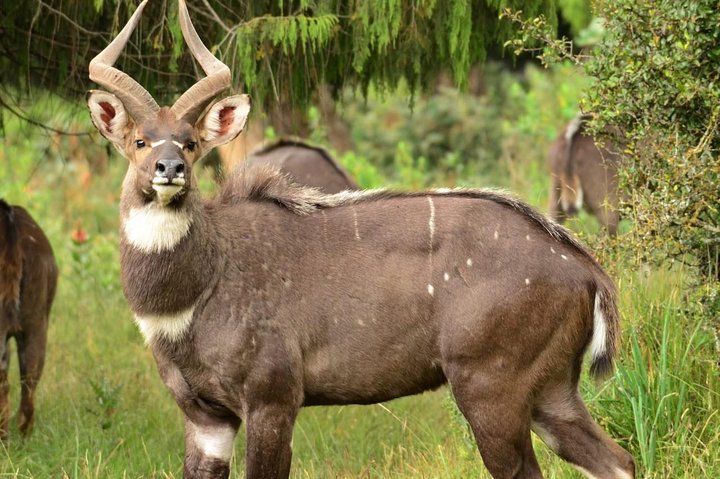
Mammal observation is equally rewarding. The Dinsho woodlands are the premier location for viewing the Mountain Nyala, a magnificent antelope endemic to Ethiopia. With an estimated population of only 2,500, it remains one of Africa's rarest large antelopes. We will take time to observe their behavior, watching the impressive males with their long, spiraling horns as they graze in the clearings. The Menelik's Bushbuck, darker and more solitary than the nyala, is also regularly encountered, often emerging from dense cover at dusk.
We will spend the late afternoon birding and photographing in the woodland before returning to our lodge for the evening. Our three-night stay allows for a comprehensive exploration of this remarkable area.
Our day begins early as we drive from Dinsho up the winding mountain road to the Sanetti Plateau, the highest continuously habitable terrain in Africa. This is the heart of the Bale Mountains' Afro-alpine zone, and it is here that we will focus our birding efforts on the suite of endemic species that have adapted to life in this extreme environment.
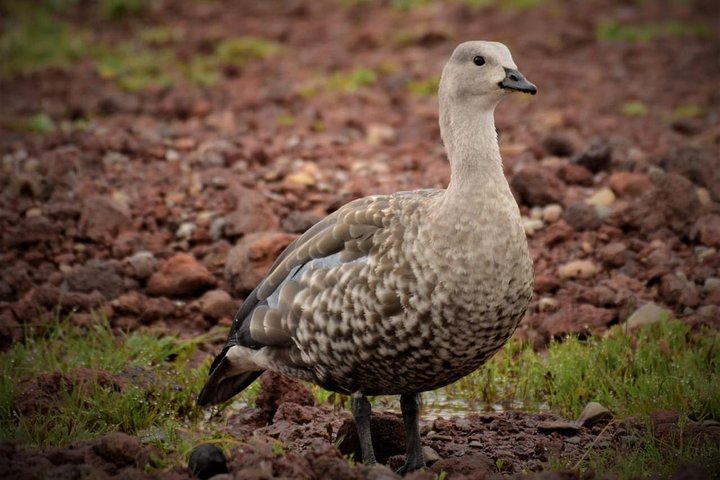
The birding highlights of the plateau are numerous. Our primary target is the Blue-winged Goose, a true goose and an Ethiopian endemic, which we will search for in the wetland areas and along the grassy stream margins. This species is often seen in pairs or small family groups, grazing contentedly on the lush vegetation. The Spot-breasted Plover, another endemic, is widespread on the plateau, its cryptic plumage making it a challenge to spot against the rocky ground. The Abyssinian Longclaw, with its distinctive black breast-band and long legs, is a familiar sight, often perched on low rocks or tussocks. We will also look for the Wattled Ibis, easily recognized by its wattled throat and probing bill, and the Rüppell's Chat, a striking bird that frequents the rocky slopes.
Raptors are particularly abundant in these open skies. The Augur Buzzard is common, often seen perched on rocks or soaring on thermals. We will also watch for Tawny Eagles, Verreaux's Eagles, Lanner Falcons, and possibly the Golden Eagle—all drawn to the plateau's rich rodent population.
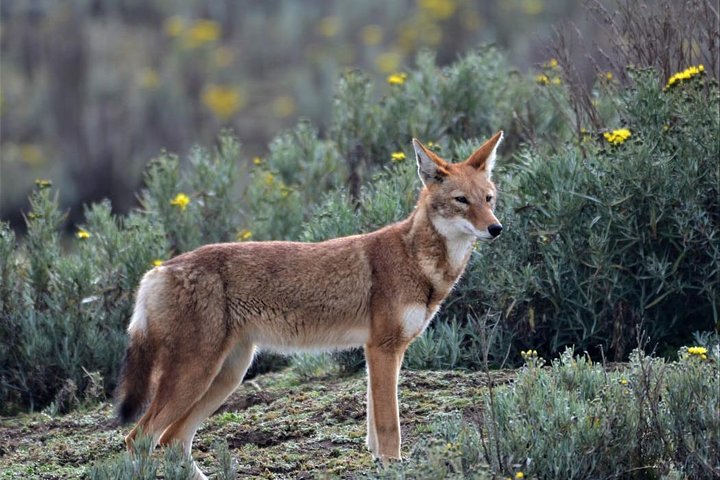
The mammal viewing is equally spectacular. The Ethiopian Wolf is our main focus—a critically endangered canid with fewer than 400 individuals left in the world. The wolves of the Sanetti Plateau are habituated, allowing us to observe and photograph them at close range as they hunt the endemic Giant Mole Rat, their primary prey. We will spend the full day on the plateau, stopping at various vantage points to maximize our bird and mammal sightings. A picnic lunch is enjoyed in the moorland, and as the sun begins to descend, we return to Bale Goba for the evening.
Today, we cross the dramatic escarpment that separates the Afro-alpine zone from the tropical Harenna Forest, descending into a world of lush greenery, cascading streams, and extraordinary biodiversity. This ecological transition is one of the most significant in Ethiopia, moving from open moorland to dense montane forest in a matter of kilometers.
Our base for the next two nights is the Bale Mountains Lodge, located deep within the Harenna Forest. The lodge's setting is exceptional—perched on the edge of the forest, it offers panoramic views across the canopy, where the morning mist lifts to reveal a world of vibrant green. The forest here is evergreen, dominated by towering hardwoods, and its humid microclimate supports a bird community that is both diverse and distinctive.
We will spend the late afternoon and early evening birding the forest trails and lodge grounds. Key target species for the Harenna Forest include:
-
White-tailed Swallow – A striking Ethiopian endemic, rare and localized, often seen flying low over the forest or perching on bare branches. We will search for this species in the vicinity of the lodge, where it has been recorded with some regularity.
-
Abyssinian Ground Thrush – A shy, elusive species of the forest floor. We will listen for its distinctive, melancholic song and try to catch a glimpse of this beautiful bird as it forages in the leaf litter.
-
Black-headed Forest Oriole – A brilliant yellow and black canopy-dweller, more often heard than seen, but which may respond to playback.
-
Narina Trogon – A breathtakingly beautiful bird, with its crimson underparts and metallic green upperparts. It prefers the denser forest and is most active in the early morning.
-
Red-fronted Parrot – A small, bright green parrot that frequents the forest canopy, often seen in pairs or small groups.
-
Sharpe's Starling – An endemic starling of the highland forests, with iridescent blue-black plumage and bright yellow eyes.
-
Abyssinian Catbird – A skulking, vocal species of the dense undergrowth, often located by its cat-like calls.
-
Yellow-fronted Parrot – A colourful endemic associated with the forest edge and juniper woodlands.
We will also look for African Goshawk, Mountain Buzzard, Common Stonechat, and a variety of sunbirds and weavers that add colour to the forest edges. As the light fades, we will listen for owls, including the African Wood Owl and the Cape Eagle-Owl.
Mammal viewing is equally rewarding. The Bale Monkey, a species only formally recognized in 2002, is a highlight. Though elusive, we may be lucky enough to spot this localized endemic in the forest canopy. Other mammals we may encounter include Giant Forest Hog, Bushbuck, and the Hagenia's Duiker.
We return to Bale Goba for dinner and a well-deserved rest, ready for further exploration tomorrow.
Drive to the Awash National Park, Through The highlands of arsi make an interesting stop. Awash Falls is home to an array of wildlife unique to the Horn of Africa. The park holds mammals such as Beisa Oryx, Soemmerrings Gazelle, Guenther's dikdik, Hamadryas and Anubis baboons and over 350 species of birds. (The park is superb for bird watching
What's included
- All accommodation All accommodations,
- Meal plan (BB meal plan) Bed and Breakfast,
- Transportation (all internal flight and all ground transportation)
- ADDIS – BAHIR DAR & GONDAR – ADDIS Mini bus And 4WD for all attraction and trip to all destinations.
- Entrance fee All entrance fee in the sight, and village,
- Guiding service Local English speaking guide and expertise in each places
- Boat trips Boat trips at lake Hawassa, and Lake Tana
The Cost Excludes
- International air tickets,
- • Any meal which is not mentioned in the included part
- • Alcohol beverages,
- • Tourist Insurance,
- • Video filming and photography fees,
- • Tips and items of personal nature like laundry, souvenirs, etc
- • All not mentioned in the included part